Technology strategy for mission-driven organizations

Your systems should
serve the mission.
Not compete
with it.

When an established organization depends on workarounds, duplicate information, and systems no one owns as a whole, staff capacity is pulled away from service. LongArc helps leadership understand the environment, decide what should change, and carry the architecture into reality.

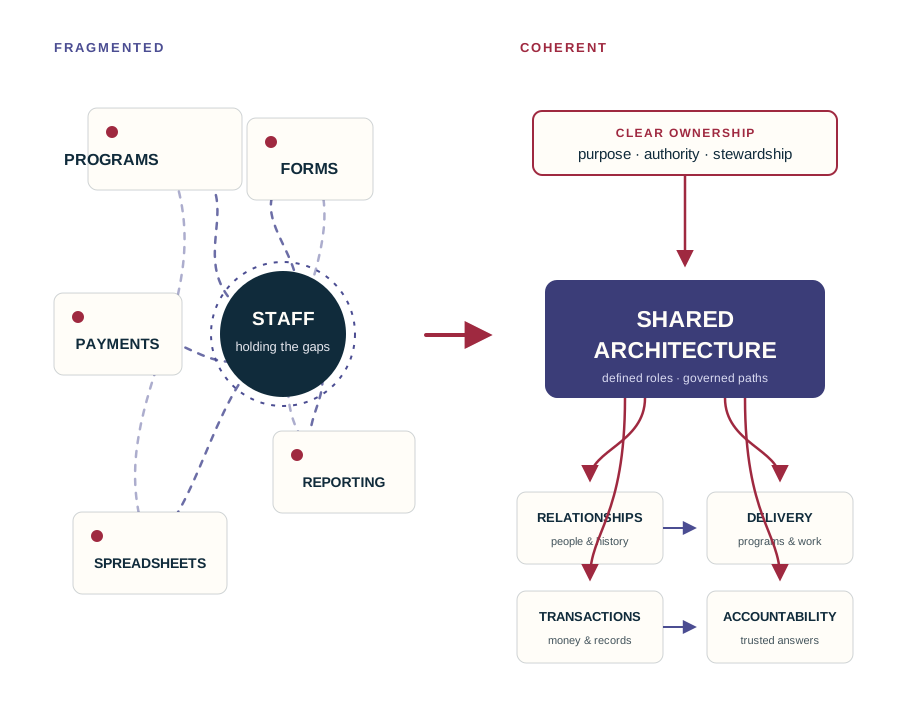
Fragmented programs, forms, payments, spreadsheets, and reporting force staff to hold the gaps together. Clear ownership and shared architecture create coherent relationships, delivery, transactions, and accountability.
Cross-functional Inherited complexity No whole-environment owner

Three common starting points

Different systems. The same missing whole.

Mission friction is the capacity lost when people must compensate for unclear processes, fragmented information, and systems that do not work together.

Scenario 01 Installed platform

We have Salesforce.
Now what?

Salesforce already touches much of the organization, but its role is unclear. Data, automation, integrations, and expectations have accumulated without one governing architecture.

  • What should Salesforce own?
  • What belongs somewhere else?
  • What should happen next, and in what order?
What is needed Boundaries, governance, and a credible roadmap.
Scenario 02 Accidental architecture

Help. We are drowning
in spreadsheets.

Spreadsheets, forms, inboxes, and low-cost CRMs were reasonable answers to immediate needs. Together, they have become a fragile operating environment no one intentionally designed.

  • The same information lives in several places
  • Staff hold the process together manually
  • The budget cannot absorb another failed solution
What is needed A practical, phased architecture that fits real capacity.
Scenario 03 Inflection point

We have a chance
to build this right.

A new organization, program, merger, or core-system replacement creates a rare opportunity. The decisions made now will become tomorrow's operating environment.

  • Define the work and ownership before the tools
  • Design the information before migration begins
  • Choose technology against clear organizational needs
What is needed An operating model and architecture before product selection.

Different starting points. One first task: understand the whole environment before changing it.

Common triggers Growth · leadership change · mergers · failed implementations · new reporting demands

What changes

A quieter, more governable operating environment.

Work depends on personal workarounds
Critical workflows are understandable and documented
Several systems contain competing versions of the truth
Authoritative sources and information ownership are defined
Staff reconcile information manually
Information moves through intentional, governed paths
Platform changes create new downstream problems
Decisions are evaluated against an organizing architecture
Knowledge leaves with individual staff members
Documentation and stewardship survive staff turnover

LongArc provides the operating model, systems architecture, and practical roadmap needed to create clearer ownership, more trustworthy information, fewer fragile handoffs, and durable stewardship.

Responsibility before product

First decide what the organization needs its systems to do.

LongArc organizes the environment by responsibility. Products enter the conversation only after ownership, authority, and the work itself are understood.

01

Relationships

Who does the organization serve, support, engage, employ, fund, or depend upon? Where should each identity and history be owned?

02

Delivery

How do programs, services, events, cases, or educational experiences move between people and teams?

03

Transactions

How do registrations, payments, gifts, invoices, and financial records move? Which system is authoritative at each stage?

04

Engagement

How do websites, forms, portals, and email connect people to the organization without creating duplicate work or records?

05

Accountability

What must staff, leadership, boards, funders, and communities be able to know, and can they trust the answer?

Start with the work. Then decide what the technology should carry.

Sometimes the answer is a clearer process, fewer handoffs, or better ownership, not another system. Sometimes several focused tools should work together. And sometimes one deeply embedded platform, often Salesforce, is already the operational center of gravity and must carry most of the work.

LongArc does not begin by defending or replacing a product. We determine what belongs in the core platform, what should remain elsewhere, and how people, information, and work should move across the whole environment.

The LongArc method

The reasoning begins above the technology.

Technology comes last in the analysis, but the work does not stop at a recommendation deck.

  1. 01
    Mission & authority

    Outcomes and decisions

  2. 02
    People & process

    Work and handoffs

  3. 03
    Information

    Ownership and truth

  4. 04
    Systems

    Roles and integration

  5. 05
    Stewardship

    Delivery and continuity

Ways to engage

Enough structure to know what the work requires.

LongArc reduces confusion and rework. The organization still provides leadership ownership, staff access, and timely decisions.

Flagship case study

From a partially built CRM to a multi-program operating platform.

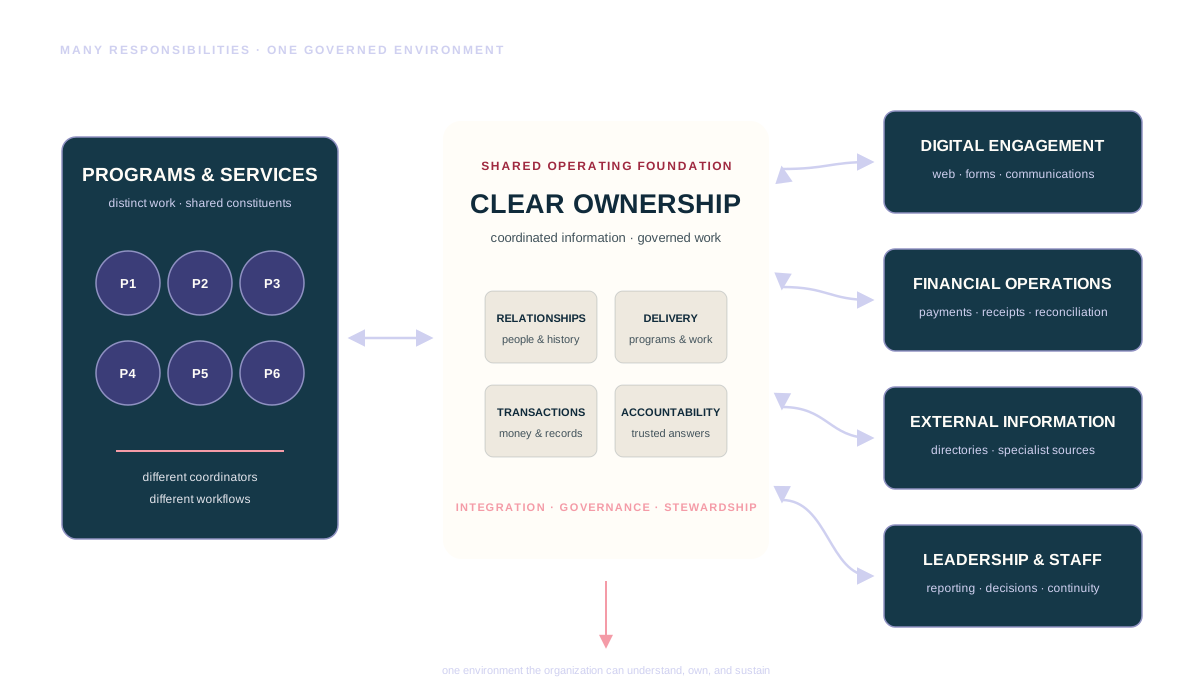
A national pastoral life organization needed one coherent operating environment across six programs, registrations, payments, constituent information, and external data. Salesforce was the dominant platform, but not the whole answer.

Six programs and the organization's digital engagement, financial operations, external information, and leadership needs connect to one shared operating foundation with clear ownership and coordinated information.
Many responsibilities. One governed environment. Live operations maintained throughout delivery.

What this proves

  • An inherited environment can be understood and rebuilt
  • The architecture can extend beyond one platform
  • Strategic reasoning can become working implementation
  • Change can be governed around live operations

Operational result

The organization gained a coherent multi-program platform supporting registrations, payments, reporting, and participant records while active services continued without interruption.

Ask about the case study
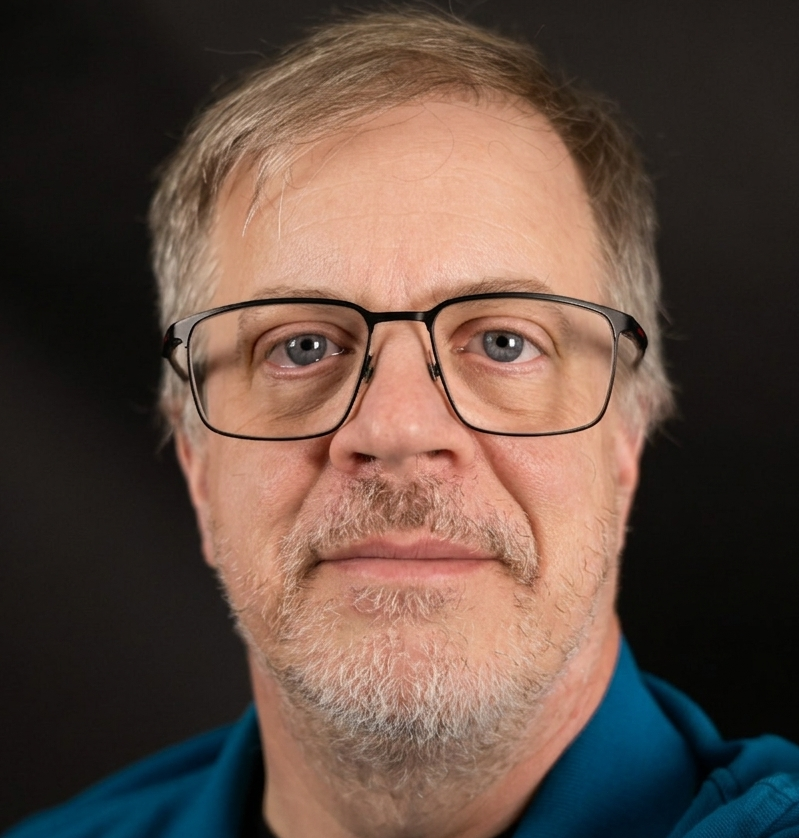
Kevin Long, founder of LongArc Consulting

Based in Montpellier, France
Working with North American organizations

About LongArc

Organizational leadership with technical depth.

Kevin Long is a technology strategist and systems architect for mission-driven organizations.

His perspective draws on microelectronics engineering, enterprise technology, systems integration, and 27 years of organizational leadership. He works across leadership, operations, information, and technology, then stays close enough to delivery to ensure the reasoning survives implementation.

The best architecture is not the most sophisticated. It is the one an organization can understand, own, and sustain.

Start a conversation

Bring the whole environment.

If important work crosses systems no one owns as a whole, begin with a conversation about what is happening, what it is costing the organization, and what leadership needs to know next.

kevin@longarc.consulting